


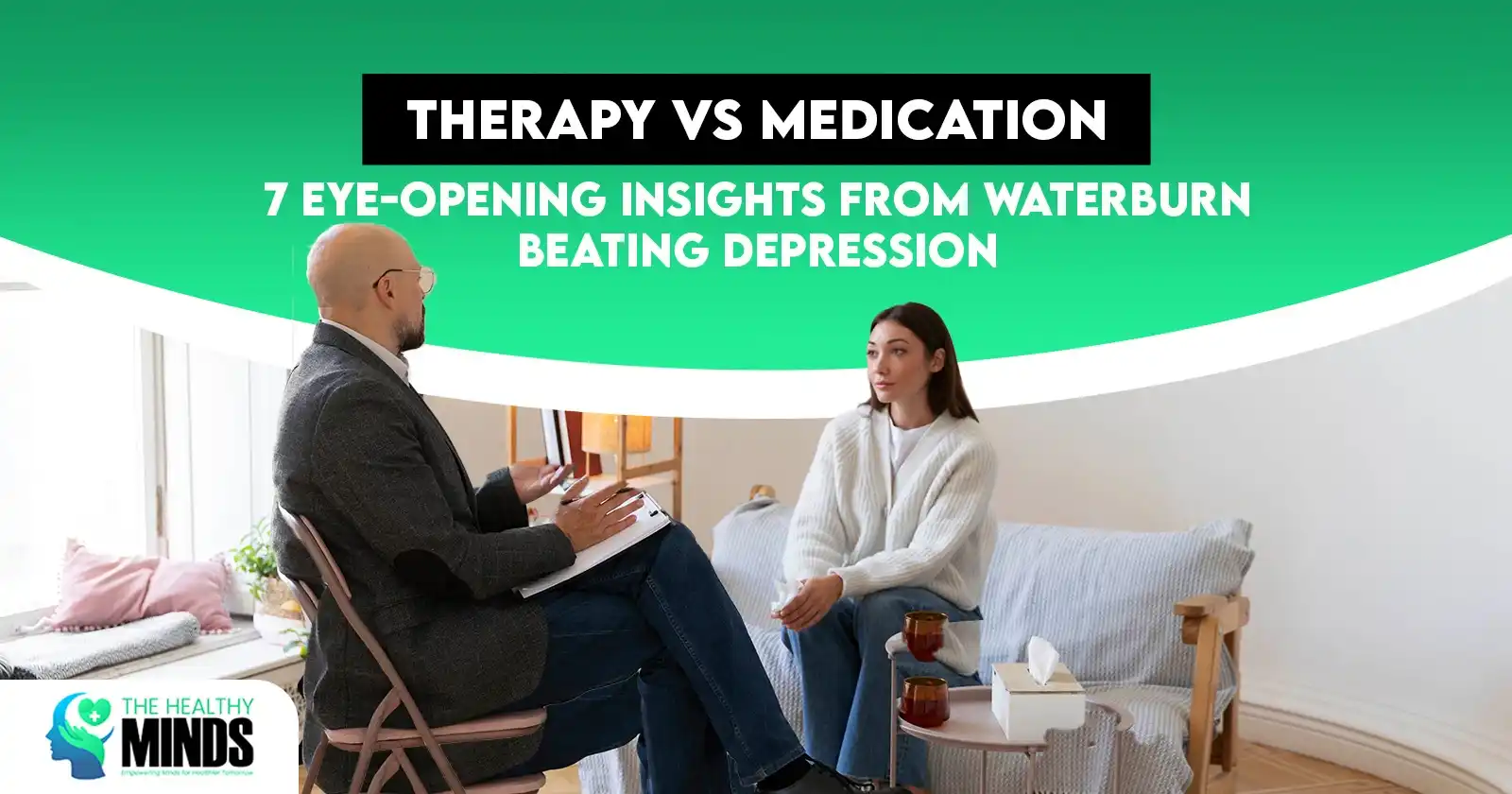
Depression is one of the most prevalent mental health issues, though many people in Waterbury, Connecticut, still have to make the straightforward but potentially life-changing choice for therapy vs medication.
Patients frequently ask this question at The Healthy Minds, which is run by Dr. Shah Nawaz, a local expert. Finding the strategy that best suits your symptoms, way of life, and long-term objectives is more important than selecting the “right” or “wrong” option when deciding for depression therapy vs medication in Waterbury.
In order to help you assess the advantages of therapy and medication, comprehend their success rates, and determine the best course of treatment, this blog compiles seven professional opinions from Waterbury specialists.
Understanding Depression Treatment in Waterbury, CT
People frequently expect speedy recovery when they look for depression treatment in Waterbury. However, depression is not just a simple sadness because it actually affects your mind, body, relationships and social life. Among the symptoms are:
- a persistent sense of emptiness or sadness;
- a loss of interest in activities;
- exhaustion and lack of motivation;
- changes in sleep patterns (too little or too much);
- trouble focusing; and
- feelings of hopelessness or guilt.
In Waterbury, treatment options typically include:
- Psychotherapy or Counselling
- Treatment with anti-depressant medicines
- Combination of both
- Changes in the way of life as exercise, the maintenance of the diet.
The right treatment plan is regulated by the severity of your depression and your personal comfort level.
Insight 1 – The Core Difference Between Therapy and Medication
The main point of argument between mental health therapy vs antidepressants lies here:
- Therapy helps manage your thoughts, actions, and coping skills. It helps you understand the reasons behind your anger, and helps deal with stress by changing your bad habits.
- Medicine works on your brain by enhancing the release of chemicals like serotonin or dopamine to make symptoms less severe.
In short, medicine changes your mood, and therapy changes your thought patterns with a degree of action. Before making a choice, many experts in Waterbury say it’s important to know these differences.
Insight 2 – Does Therapy or Medication Work Better for Depression?
The honest answer to the question of “does therapy or medication work better for depression?” It depends.
- Therapy often works very well for light depression until moderate. Patients acquire skills that help for a long time without worrying about side effects.
- For severe depression, medicines are generally needed to stabilize the mood and energy before treatment works.
Therapists and the Waterbury physicians in depression treatment often say the best results come from a combination of therapy and medication. The medications can help with symptoms, and therapy can help make changes that last.
Insight 3 – Benefits of Therapy for Depression Beyond Symptom Relief
There are many benefits of depression therapy beyond the symptom relief :
* Develop the resistance: Tips meals adapt to fit for stress, loss or failure. • Self analysis: patients need to know how their thoughts and actions contribute to their depression.
- improvements: best communication skills often lead to less conflicts at work and home.
- Prevent Relapse: The skills acquired during therapy remain useful after completion.
Many Waterbury patients indicate that their general faith and the quality of their life has been open as treatment, in less than facilitating their depression.
Insight 4 – Is Therapy Better than Medication for Depression?
So, is therapy better than medication for depression?
* Especially for mild cases, therapy is often better if you prefer a natural approach and without side effects. If you are addressing basic problems and prepare for obstacles in the future.
- When depression is severe or immediate relief is required, drugs can be a better option.
A balanced approach is frequently advised by Waterbury depression treatment specialists: begin with what feels right and be willing to combine treatments if necessary.
Insight 5 – Best Depression Treatment Near Me in Waterbury
If you’re searching for the “best depression treatment near me in Waterbury”, you’re not alone. Finding accessible and compassionate care matters.
Dr. Shah Nawaz places a strong emphasis on individualized care at The Healthy Minds. Before you choose therapy, medication or two, the history,and each patient’s symptoms is properly taken into account.
Local care is important because it enables:
- Simple access to appointments
- Knowledge of nearby resources (wellness initiatives, support groups)
- A welcoming community setting
Insight 6 – Comparing Success Rates: Therapy vs Medication
Looking at therapy vs medication success rates for depression, studies and local experiences highlight important differences:
. Only medicines: well to relieve serious symptoms but they suddenly increase risk of relapse.
- Therapy only: Excellent results with consignment coherent for light until moderate cases.
Therapy has the highest levels of success, especially for those who suffer from moderate to severe depression. As the therapy combined with the biological and emotional components of depression, that’s why it is often recommended by Waterbury specialists.
Insight 7 – Can Therapy Replace Antidepressants for Depression?
The question: can therapy replace antidepressants for depression? comes up often. The answer: sometimes.
- Therapy may be sufficient for mild to moderate depression
- Medication is typically required, at least initially, for severe depression.
After stabilizing with medication, many Waterbury patients shift to therapy as their primary course of treatment.
The Role of Lifestyle in Depression Treatment
In addition to the therapy and medicines, lifestyle choices have a significant impact on the management of depression. In addition to supporting mental health, regular exercise, and healthy habits can also improve the results or medications. Simple adjusts, like daily walks or practicing conscious breathing, they help many patients in Waterbury feel happier and less stressed.
Personalized Care for every unique journey
Every person experiences depression individually. Although some people can only benefit from therapy, others may need a mixture of strategies. Therefore, the reason for the Waterbury, the infinity local suppliers are not employed individual care plans. The doctors and therapists are looking for the patients to receive the best possible support to customize the treatment for each patient.
The Importance of Ongoing Support
Depression often requires constant care; There is no magical ball. Regular checkpoints are useful for patients participating in Community Support Groups, the Therapy sessions or medication adjustments. Relaxed hindrance and insurance are two advantages of this continuity of care.
Choosing the Right Path for You
What works for the individual is the most important consideration when choosing the therapy and medication. While some patients need medication to stabilize the symptoms initially, others prefer non-pharmacological treatment. Many people in Waterbury find that the best results come from experimentation of a strategy, then to adjust under their provider’s recommendations.
Stigma and Misconceptions in Waterbury
Stigma is one barrier to Waterbury depression treatment.
- Myths like “medicine is a weakness” are widely held.
- “Only those with serious issues should seek therapy.”
- “You can simply “snap out” of depression.”
People are deterred from seeking assistance by these misconceptions. In actuality, selecting therapy or medication is a show of strength rather than weakness because both are evidence-based treatments.
Overcoming Stigma Around Depression Treatment
Stigmatization is one of the main obstacles to getting help. Fearing to be judged, many people are reluctant to see a psychiatrist or therapist. However, mental health talks are becoming more common, thanks to the countryside and professional campaigns. The secret of recovery is to understand that depression is a medical disease rather than a personal failure.
Personalized Care Matters
It is necessary to realize that there is no unique approach to depression treatment during the debate on the Therapy vs Medication in Waterbury. Some people get more benefits from the Therapy of the Cognitive behavior, while others experienced the prescribed antidepressants offer a larger relief. The most effective strategy is often mixed, customized by a reliable expert that is aware of the special story, symptoms and objectives. This individual approach ensures Waterbury, Connecticut treatment of depression truly prompts Long-term recovery.
Building Long-Term Resilience
Therapy often makes the development of adaptation mechanisms that last for life, although medicines can reduce symptoms. Therapy teaches the skills like the healthiest thought models, your emotional adjustment that only medicines cannot provide, according to Waterbury experts. In the wider context of depression therapy vs medication in Waterbury, this difference to many patients makes therapy the pillar.
The Role of Local Support Systems
The existence of local support networks is another essential component of depression treatment in Waterbury, Connecticut. For ensuring that patients receive ongoing care outside of scheduled hours, many clinics collaborate with neighborhood resources. In addition to improving results, this integrated support makes people feel less alone. Waterbury provides a network of compassionate care. This knowledge can help people who are debating for therapy vs medication to make the best decision.
Personalized Care from Waterbury Experts
Dr. Shah Nawaz approves the patient’s approach at The Healthy Minds. Help patients explore options and develop personalized plans rather than to hire a single approach. While only one person only succeeds in therapy, others need medication, and several successes with both of them. How to choose the right handed-by-handed manner
Here is a simple and Step -Step procedure to help you make your decision:
- Determine if your symptoms are slight, moderate or serious.
- Take advantage of the side preferences and effects: prefer to use spoken therapy or medicine?
- Think about your long -term goals: Would you like a strange change or relief of symptoms?
- Talk to a local specialist: Don’t put yourself into stress. You may have advice from an expert.
- Stay adaptable: With time, you can change your treatment strategy.
Remember that there is no single approach to the treatment of depression.
Final Words
The argument for Therapy vs Medication for depression at Waterbury doesn’t conclude with an easy response. While medicine offers short-term respite, therapy offers long-term resilience. The combination works best for a lot of people. The most important thing is to find a treatment that suits you.
The first step toward the recovery is to contact the local professionals such as Dr Shah Nawaz at the healthy minds. To get started with the advice, of using medicine, therapy or both, it depends on your level of depression
FAQs: Therapy vs Medication
-
Does therapy or medication work better for depression?
Depending on severity, for light cases, therapy is quite often and for serious depression, medicines may be essential.
-
What are the benefits of therapy for depression compared to medication?
Therapy provides coping skills, builds self-awareness, and prevents relapse. Medication mainly reduces symptoms quickly.
-
Is therapy better than medication for depression in mild cases?
Yes, because therapy is often recommended in mild cases.
-
Can therapy replace antidepressants for depression completely?
In some cases, yes. But for severe depression, medication is usually needed, at least at first.
-
What is the best depression treatment near me in Waterbury?
The best treatment can be designed depending on your symptoms. At The Healthy Minds, experts personalize care through therapy, medication, or both.
-
What are the success rates of therapy vs medication for depression?
Medication alone often works quickly but relapse risk is higher. Therapy alone has long-term benefits. Combined treatment shows the highest success.
-
Is mental health therapy vs antidepressants a permanent choice?
No. Many patients start with one approach and later combine or switch, depending on progress.
-
8. Is depression therapy in Waterbury effective without medication?
Yes, many patients see the positive results of therapy only, especially when its depression is easy to moderate. Therapists use evidence methods as the cognitive therapy of behavior to help patients manage symptoms of course.
-
9: How long should I stay on depression medication in Waterbury?
The duration ranges from the person to the person. Some people may need medication for several months, while others may benefit from the use of the long -term plan. Always look at your provider before making changes to your treatment plan.
-
10: Can I combine alternative therapies with depression treatment in Waterbury?
Many people find an additional relief from the practices such as meditation, yoga or acupuncture. You should consult your doctor before getting into such practices.