


A Clinical Discussion from The Healthy Minds Clinic
When I sit with our psychiatric team at The Healthy Minds Clinic and we review complex anxiety cases, one topic often rises to the surface. Some patients have tried multiple medications. Others have been in therapy for years. A few are exhausted, frustrated, and quietly losing hope. That is usually when we begin discussing TMS treatment for severe anxiety disorder.
It is not presented as a miracle. It is not offered casually. It is considered carefully, especially when traditional treatments have not provided enough relief. In this guide, I will explain how we discuss this option internally—with depth, caution, and clinical realism—so families can understand it clearly.
Understanding Severe Anxiety Disorder
Severe anxiety disorder is not simple nervousness. It can involve constant worry, racing thoughts, muscle tension, panic attacks, sleep disturbance, digestive issues, and difficulty functioning at work or home. In many patients, anxiety becomes physically exhausting. The body remains in a prolonged stress response.
Triggers vary. Some individuals have genetic vulnerability. Others develop anxiety after trauma, chronic stress, or medical illness. In our clinic, we often observe that untreated anxiety can gradually reshape daily life. People begin avoiding social situations, work responsibilities, or even routine errands. We start considering advanced options like TMS for severe anxiety disorder when anxiety or related disorders become severe and persistent regardless of therapy and medicines. What matters most is learning where does TMS fit in larger treatment plan.
What Is TMS and How Does It Work?
It is a non-invasive technique for brain stimulation. Transcranial magnetic stimulation for anxiety uses magnetic pulses which targets specific regions in brain linked with the regulation of mood and anxiety. This way underactive neural circuits are stimulated and patterns of brain activity is balanced again.
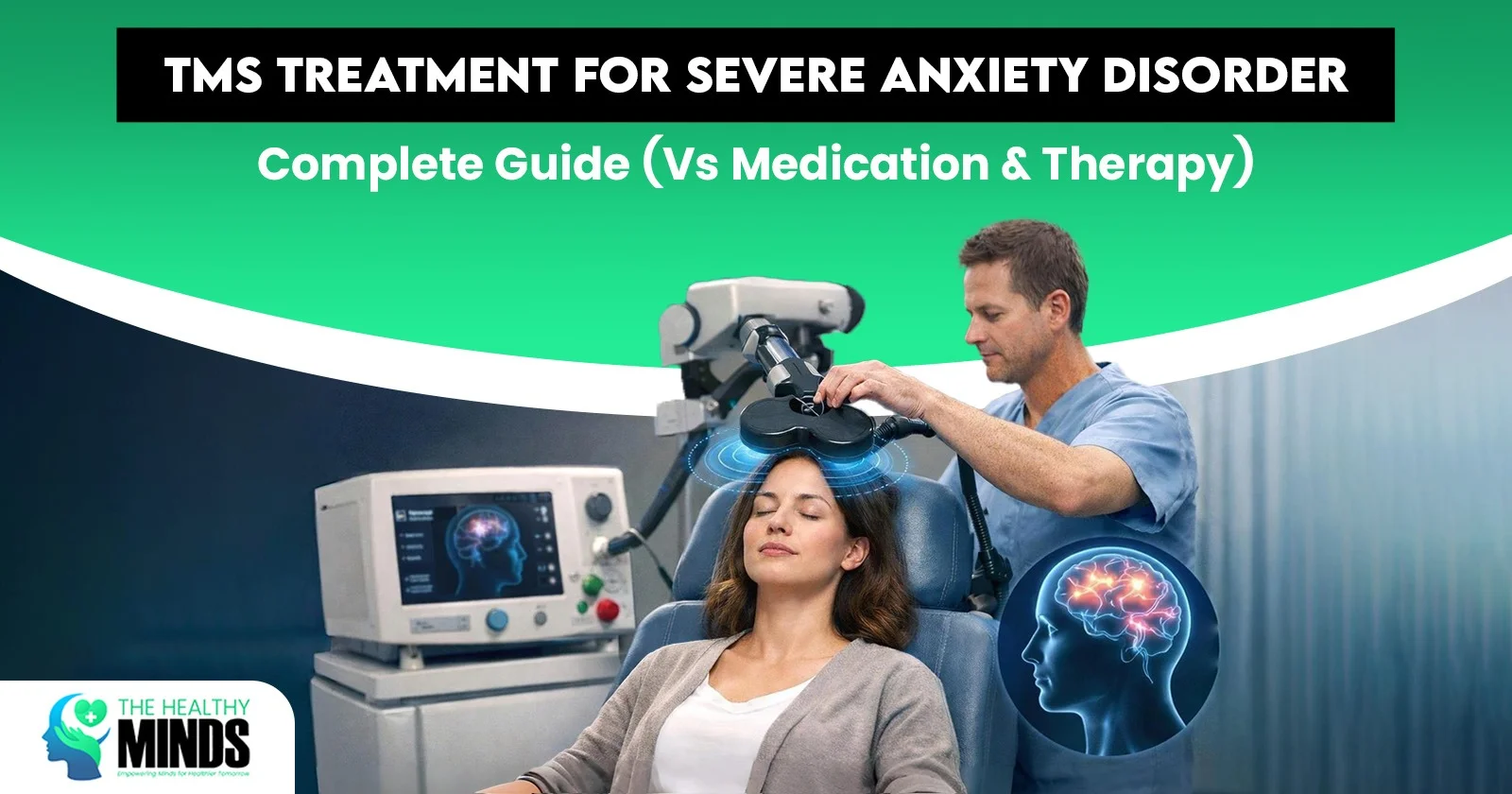
Unlike medication, TMS does not circulate through the bloodstream. It directly acts on the cotex. A coil is gently placed against the scalp and delivers magnetic pulses in guided sessions. During the entire procedure, patients are in their senses and alert. While explaining the TMS treatment for anxiety, we guide team that it aims to modulate the prefrontal cortex and limbic system that is interconnected. Anxiety often involves hyperactive fear circuits. TMS helps restore healthier communication between these regions.
FDA Approval and Research Background
TMS was first FDA-approved for treatment-resistant depression. Over time, research expanded into anxiety-related conditions. While anxiety-specific indications continue to evolve, growing evidence supports its use for patients with comorbid anxiety and depressive symptoms.
Clinical trials on TMS for generalized anxiety disorder has shown a promising reduction in symptoms, especially in patients with medication failure. It has been noticed from studies that physical tension, restlessness, and severity in worry got improved. Along with TMS anxiety research review, we also consider methodology carefully with other staff members. We consider some parameters like the size of sample, stimulation, and data for follow-up. Responsible practice requires evidence-based decision making alongside enthusiasm.
Severe Anxiety Disorder Therapy Options
We evaluate some standard treatments before recommending Transcranial Magnetic Stimulation. Therapy options for for severe anxiety disorder includes CBT, interventions that are trauma focused, acceptance-based therapies, and exposure therapy.
Medication options may include SSRIs, SNRIs, buspirone, or short-term use of other agents. Many patients respond well to these treatments. However, some experience partial improvement or intolerable side effects.
It is usually at this stage that TMS treatment for severe anxiety disorder enters the conversation. It becomes part of a layered strategy, not a replacement for psychotherapy or medical monitoring.
TMS Anxiety Symptom Improvement Timeline
One of the most common questions our team hears is about timing. Patients want to know how quickly they will feel relief. The improvement timeline varies, but patterns do exist.
Typically, TMS is administered five days per week for four to six weeks. Some protocols extend to eight weeks depending on symptom severity. Many patients begin noticing subtle improvements around week two or three. Sleep may improve first. Physical tension may decrease. Racing thoughts may slow slightly.
More noticeable anxiety reduction often appears around week four or five. By the end of a full treatment course—usually 20 to 36 sessions—many patients report meaningful functional improvement. However, we always remind families that TMS treatment for severe anxiety disorder does not create instant change. Neural adaptation takes time.
How Many TMS Sessions for Anxiety?
In structured programs, patients typically undergo 20 to 36 sessions. Each session lasts between 20 and 40 minutes depending on the protocol used. The number may increase if deep TMS for anxiety disorders is selected.
Deep TMS uses specialized coils to stimulate broader and deeper neural circuits. Some research suggests it may enhance outcomes in complex cases. When discussing TMS treatment for severe anxiety disorder, session planning is individualized based on symptom intensity and previous treatment response.
Maintenance sessions may be recommended in some cases. These are spaced weekly or monthly after the initial course to sustain improvement.
Advanced Protocols and Deeper Brain Stimulation
Not all anxiety presentations are the same. Some patients experience constant mental worry, while others suffer primarily from physical symptoms—tight chest, nausea, trembling, or panic sensations. When these complicated cases show up, we prefer using some advanced options like the deep TMS anxiety which allows the deeper brain regions to get stimulated helping in processing of emotions.
Clinically, deeper stimulation can be especially helpful for patients with long-standing anxiety patterns or overlapping mood symptoms. I’ve observed that patients receiving these advanced protocols often report improvements not only in anxiety intensity, but also in emotional resilience and stress recovery.
What Patients Experience During Treatment
Patients often have a fear about any discomfort during the transcranial magnetic stimulation for anxiety. These treatment sessions are followed and done while the patients are communicating in conscious state, seated comfortably. Patients may feel a tapping sensation in a rhythm on their scalps most commonly. Many have noticed mild tenderness in scalp and headache which is temporary and reduces in further sessions.
Serious side effects are rare. Seizures are a known risk but occur extremely infrequently when patients are properly screened. I emphasize that safety protocols exist for a reason, and we follow them carefully—not casually.
Some patients ask whether anxiety can worsen at first. When neural circuits are trying to adjust patients can feel a mild but temporary emotional sensitivity which recovers by time and consistent sessions.
TMS for Generalized Anxiety Disorder
TMS for generalized anxiety disorder has gained attention in recent years. GAD involves persistent and excessive worry across multiple life domains. Patients often describe feeling “on edge” constantly.
It is shown from different clinical studies that hyperactivity in anxiety-related brain circuits can be reduced with TMS. Many patients have reported decrease in rumination and improvement in emotional patterns. We assess comorbid depression, chronicity, and severity while evaluating TMS treatment for severe anxiety disorder in GAD patients. Even after introducing TMS, combination therapy remains essential.
TMS Versus Medication Effectiveness
The discussion of TMS versus anxiety meds effectiveness often arises during treatment planning. Medicines are highly effective but it leads to some side effects including weight gain, GIT upset, sexual dysfunction, and sedation.
TMS, on the other hand, does not produce systemic side effects because it is localized. However, it requires frequent clinic visits and time commitment.
In many cases, we do not frame the decision as either-or. Instead, we examine TMS versus anxiety meds effecotiveness in combination strategies. To enhance the benefits, some patients continue taking medicines at lower doses.
TMS Anxiety Treatment Benefits
When reviewing TMS anxiety treatment benefits, our team notes several advantages. It is non-invasive. It does not require anesthesia. Patients can drive themselves home afterward.
Another benefit is cognitive clarity. TMS doesn’t usually cause sedation or cognitive impairment like some medications. Many patients finds it positive as they remain alert and functional during the process. We also observe that TMS anxiety treatment benefits often include improved sleep quality and reduced physical restlessness. These improvements contribute significantly to daily functioning.
Combining Treatment With Medication or Therapy (Real-World Use)
In practice, many patients don’t stop their existing care—they build on it. Combining therapeutic medication with structured psychotherapy and brain stimulation often produces more stable outcomes than using one approach alone.
From a clinician’s perspective, this combination works because:
- Medication can reduce baseline symptom load
- Therapy builds coping and insight
- Brain stimulation improves neural adaptability
The result is synergy, not conflict.
What to Expect During the First Session
We have noticed that patients often feel anxious before their first appointment. Initially, a thorough psychiatric assessment alongside medical screening is conducted. Then we review history of seizures, treatment before, and devices if implanted any.
In the first TMS session, mapping of motor cortex is done to determine the stimulation intensity correctly. Patients can feel sensations of tapping on their scalp. Some may also feel mild headache or discomfort that is temporary. We guide patients with evidence that they will be in their senses and in control during the TMS treatment for severe anxiety disorder. If they need a pause, it is granted. The environment is calm and cozy at The Healthy Minds to assure anticipatory anxiety reduction in ptients.
TMS for Adults and Children
Most TMS protocols are designed for adults. Research in adolescents is growing, but pediatric use requires careful specialist evaluation. Brain development considerations must be addressed.
Those adults are eligible for this treatment who have faced treatment failure for anxiety and depression, absence of seizure risk factors, and stable mental status. We involve guardians, conduct some more assessments, and ensure compliance with current guidelines when designing TMS treatment for severe anxiety disorder in young population.
TMS Anxiety Treatment Cost USA
Cost is a realistic concern. TMS anxiety treatment cost USA varies by region, clinic expertise, and insurance coverage. A full course can range from several thousand to over ten thousand dollars without insurance.
Insurance coverage depends on the criteria of policy and diagnosis. Many of them covers TMS for depression primarily while it may require documentation for anxiety-specific coverage. We provide flexible payment options, help patients navigate insurance approvals, and discuss about cost before starting the TMS treatment for severe anxiety disorder at The Healthy Minds.
Finding TMS Anxiety Therapy Near Me
Patients often find it overwhelming by the options when they search for the best TMS anxiety therapy near me. Not every clinic offer this treatment with structured protocols and experience. Staff at best TMS clinics for anxiety USA consists of board-certified psychiatrists, protocols that are evidence-based, and combined therapy services. What matters alongside is the type of equipment, trained technician, and follow-up care.
At The Healthy Minds Clinic, we combine psychiatric oversight, psychotherapy integration, and structured follow-up to ensure safe delivery of advanced care.
Final Words
In the sessions of clinical supervision, we often remind our staff that anxiety is overwhelming. Though it protects us in dangerous moments but upon aggression, it negatively impacts our sleep. hope, relationships, and deprives off sleep.
TMS treatment for severe anxiety disorder is not a first-line option for everyone. It is a carefully considered intervention for those who have struggled despite standard care. Research continues to evolve. Outcomes vary. Yet for many patients, it provides measurable relief when other treatments fall short.
At The Healthy Minds, we approach each case with balance. Medication, therapy, lifestyle modification, and advanced neuromodulation are not competing tools. These strategies are complimentary in a comprehensive plan. Healing severe anxiety requires patience, science, and compassionate support. With the right structure, recovery is possible.
Frequently Asked Questions (FAQs)
-
Is TMS safe for anxiety treatment?
It might cause mild headache or scalp discomfort that is temporary but is safe when supervised by a medical professional.
-
How long does TMS last after treatment?
It usually take months for sustained improvement in patient symptoms. Some patients may need sessions for maintenance.
-
Can TMS replace medication completely?
It depends on the individual. Some patients reduce medication doses, while others combine both approaches.
-
Is TMS painful?
Most patients describe a tapping sensation. Discomfort is usually mild and temporary.
-
Does insurance cover TMS for anxiety?
Coverage varies actually. May plans provide coverage for depression led TMS while it needs documentation for anxiety-based treatment.
-
How do I know if I am a candidate?
A psychiatric evaluation at The Healthy Minds Clinic can determine whether TMS is appropriate for your condition.