


Emma shuffled into The Healthy Minds one chilly February morning. Her coat hung loosely, her hands twisted around the strap of her bag. She spoke softly, almost hesitatingly, describing mornings that felt impossible. “Even brushing my teeth… it’s too much,” she said. And the staff just listened. They had heard it before, over and over, yet every story was different, every pause, every hesitation, telling a new truth.
Depression isn’t neat. It isn’t numbers on a chart. It’s fog. It’s weight. It’s the quiet disappearance of color from daily life. Ema’s morning was filled with fatigue while for John, his evenings were restless because of overthinking. For Maria, it was losing focus at work and forgetting things that used to feel effortless. This is why the team often talks about Ketamine Vs TMS. Not in theory. Not like a textbook. But in real, living stories human lives waiting for relief.
Walking the hallways, the staff notice tiny details. The way a patient’s shoulders slump. How they fidget with a pen. How eyes avoid contact, or stare too long at nothing. These are clues, subtle markers of a mind under siege. Depression touches everything: work, family, sleep, meals. Alex, a father of two, stopped going to school events, missing moments that couldn’t be regained. The team knew: treatments like ketamine and TMS weren’t just options. They were lifelines. They could lift, nudge, steady. They could, perhaps, let life in again.
Depression in Daily Life
Maria came in one afternoon, exhausted from a week of sleepless nights. She rubbed her temples and said, “I don’t even remember what it feels like to be happy.” The team nodded, listening. Not lecturing, not explaining brain chemistry just listening. And that matters.
Depression isn’t just an imbalance in chemicals instead it is a lively experience with small battles and victories.
For patients like Alex, Emma, and Maria, daily life becomes a minefield. Missed appointments. Ignored texts. Forgotten birthdays. Simple choices become monumental. Clinicians at The Healthy Minds notice these patterns and reflect: Which treatment suits which story? Some need the immediacy of ketamine. Others benefit from the slow, steady reinforcement of TMS. And sometimes, a blend of both is ideal. Real lives, real context, guiding real decisions.
Even minor joys, like a walk in the sun or a brief conversation, feel enormous to someone with depression. Every subtle change like Maria smiling briefly while talking about her dog and Alex laughing while sharing his core memory, is noted by our team. Every such moments are as important as a clinical score. They are evidence that Ketamine and TMS for depression isn’t just about symptoms. It’s about reclaiming life.
Why Individualized Care Matters
No two stories are identical. Emma’s mornings were heavy and immovable. John had restless evenings, while chasing worst case scenarios in his mind. Maria’s focus had evaporated entirely, leaving her unsure she could perform even simple tasks. Each of these narratives shapes the path forward.
At The Healthy Minds, treatment decisions are not only about research or protocols. They are about humans in front of the clinicians. Patients’ routines, responsibilities, emotional state, and personal goals inform the choice between ketamine, transcranial magnetic stimulation, or both. Rapid relief from ketamine provided a lift to Emma that was enough to let her engage in the therapy. TMS later reinforced her gains, helping her brain consolidate small but significant improvements.
Recovery isn’t linear. It’s messy. There are good days and bad. But with observation, reflection, and care tailored to the individual, the team sees progress. Small steps. Real gains. Moments where life feels lighter. This is why Ketamine Vs TMS isn’t a simple comparison. It’s a conversation, a collaboration, a living, breathing process.
How Ketamine and TMS Work
Ketamine: Immediate Relief, Tiny Breaks in the Fog
Emma sat in the infusion chair again. The morning sunlight spilled across the room, warm but muted. Her hands fidgeted with the blanket on her lap. “I don’t even know if this will help,” she murmured. The nurse smiled softly. “We’ll just see. Small steps.”
Minutes into the infusion, she felt it. A lightness. Not a cure. Not a miracle. But the fog that had clung to her thoughts began to lift. Her brain, over months of depression, had been stuck, rigid. Ketamine nudged it. It touched the glutamate pathways, rewiring things subtly but quickly. Emma described it as “being able to breathe again… even if just a little.”
Side effects appeared too. Dizziness, brief detachment, a strange floating sensation. But for her, the relief was worth it. Tiny victories being able to answer a text, take a shower, focus on a thought were monumental. Observing her, the team knew why Ketamine and TMS effectiveness depends on context. For acute depressive episodes, ketamine can provide a breakthrough, a window for therapy, reflection, and recovery.
Transcranial Magnetic Stimulation: Slow, Steady, Lasting Changes
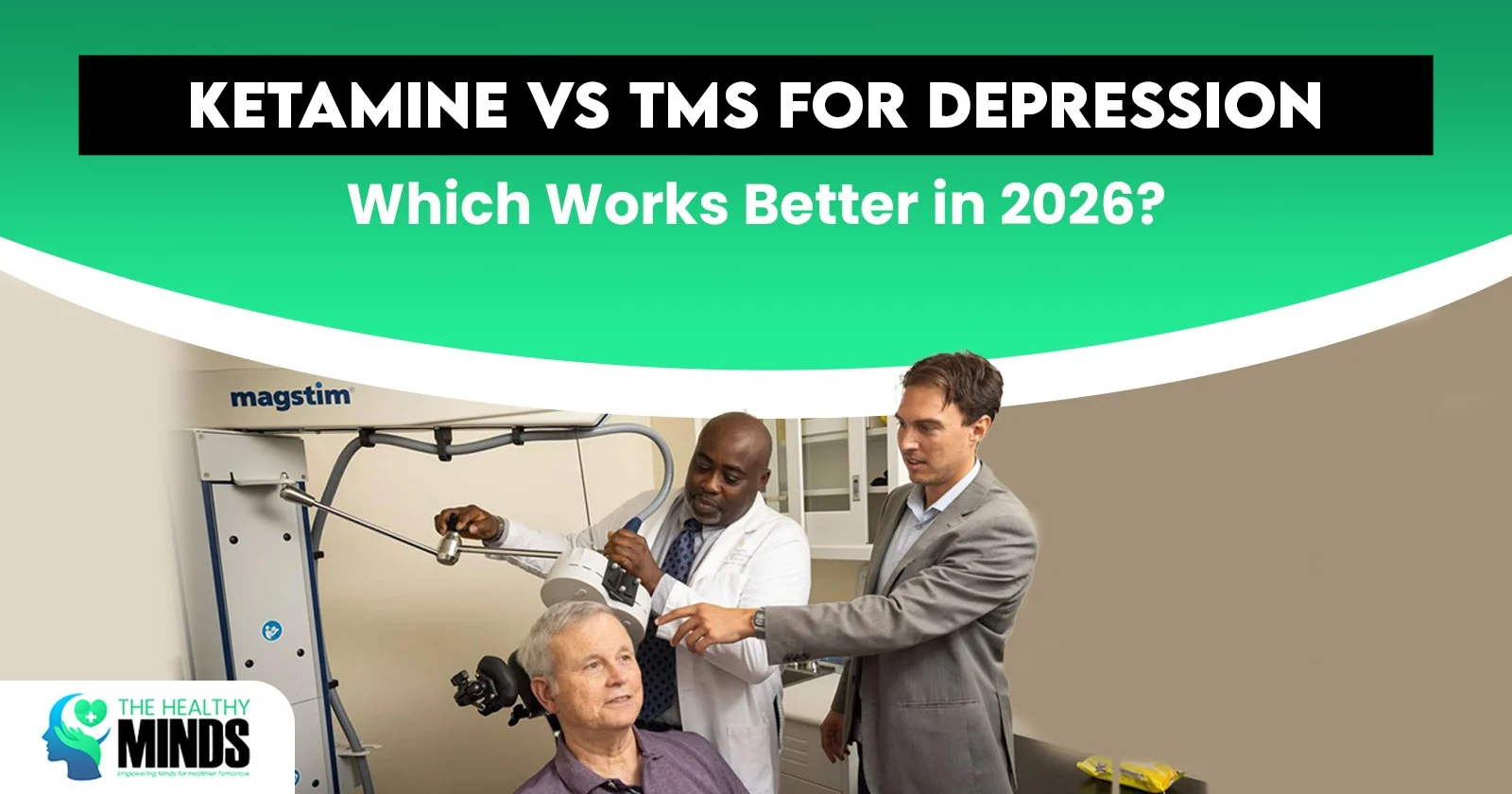
Across the hall, John began transcranial magnetic stimulation sessions. A small coil pressed against his prefrontal cortex. Tapping, buzzing. “Feels like tiny drumbeats,” he said. Mild discomfort. Tingling. Nothing serious. But different from ketamine it worked slowly. Incrementally. Each session nudged neural circuits awake, strengthened pathways dulled by chronic depression.
Weeks passed. Subtle changes. A smile. Better focus. Less anxiety at work. He told staff, “It’s like building a bridge brick by brick. I can see progress, even if it’s slow.” And that’s exactly what TMS does. Unlike ketamine, which bursts through fog, transcranial magnetic stimulation rebuilds pathways for long-term stability.
Patients often describe it differently. Maria said, “Ketamine felt like a gust of wind. transcranial magnetic stimulation feels like a hand steadying me over time.” Both approaches are valid. Both have stories. Both matter. And deciding between them requires understanding the lived experience, not just the science.
Comparing Outcomes: Real Stories, Real Differences
Emma’s rapid improvement allowed her to participate in therapy immediately. Her fog lifted enough to make decisions. TMS later reinforced her progress. John’s improvement was gradual but stable. He regained focus at work and at home. Maria combined both ketamine for acute relief, TMS for long-term support.
This illustrates a key truth: Ketamine Vs TMS isn’t about which is better universally. It’s about fit. Severity, history, daily life, co-occurring anxiety all matter. Observing outcomes in patients is as important as reviewing studies. These narratives bring science to life.
Some patients respond better to ketamine. Others find TMS more sustainable. And many benefit from both, sequenced strategically. These trajectories are continuously discussed by our clinicians at The Healthy Minds. Observations, and patient feedback are important considerations for the adjustments. Recovery isn’t linear. It’s messy. And that’s okay.
Matching Treatment to Individual Needs
Depression looks different in everyone. Emma felt heavy mornings and John had restless nights. Maria got anxiety linked with depression, which made her focus impossible. Every patient needed a customized plan. Ketamine provided the urgent lift for Emma. transcranial magnetic stimulation offered slow, lasting improvement for John. For Maria, a combination worked best.
The team emphasizes flexibility. No rigid protocols. Observing, reflecting, adjusting. Patients participate in decisions. Lifestyle, routines, emotional state all shape treatment choices. Recovery is collaboration. Each patient journey confirms one lesson: Ketamine and TMS for depression is about humans, not only scores or scans. It’s about reclaimed life.
Experiencing Side Effects: Patient Perspectives
Emma leaned back in the chair after her third ketamine infusion. Her legs felt slightly wobbly. “I feel… weird,” she admitted, her voice small. The nurse nodded. “That’s normal. Brief. It passes.” Dizziness, mild nausea, a sense of detachment. Small, fleeting. But the relief she felt the fog lifting made it worth it.
John, undergoing TMS, felt something different. Tingling on the scalp. A gentle buzzing. Short-lived headaches sometimes. He shrugged. “Strange, but fine.” His improvements came slowly. Each week, the subtle gains added up. Tasks at work became manageable. Conversations at home felt easier. Side effects were minor. But his progress? Significant.
Side effects are part of the narrative. Not just clinical data. They interact with human experience. Some patients joke. Some worry. Some pause to reflect. Observing this, the staff at The Healthy Minds realized: treatment isn’t only about medicine or machines. It’s about noticing, supporting, guiding while life unfolds in real time.
Understanding Costs: Planning Around Life
Financial crises feels a heavy burden. Emma, being a single was worried about the cost of multiple infusions. Our clinic provided her with some practical solutions to balance her treatment costs. Logistics of life are equally important as the relief.
transcranial magnetic stimulation is different. Predictable schedules. 20–30 sessions over weeks. Costs partially covered by insurance. John appreciated that: “I could plan. No surprises.” Predictability reduces stress. Encourages consistency. That matters. Consistent attendance ensures neural pathways strengthen steadily.
The difference between Ketamine and TMS cost isn’t just dollars. It affects engagement, comfort, emotional energy. At The Healthy Minds, clinicians discuss finances openly. Patients make informed choices. Care isn’t just about treatment it’s about integrating therapy into real life.
Daily Life Adjustments
Treatments interact with daily routines. Ketamine sessions for Emma lasted a few hour per infusion with some rest. while TMS sessions for John were shorter but multiple. Patients had to plan around work, family, commuting.
Maria added small routines like walks after every session, journaling, and therapy checks while combining ketamine with TMS. These small adjustments enhanced efficiency.
Mental health isn’t isolated. It intersects with meals, sleep, relationships, and exercise. Staff observe, guide, and adjust. These subtle lifestyle integrations matter as much as the treatments themselves.
The Healthy Minds emphasizes this holistic approach. Recovery is also a lived experience along with procedure. Side effects, costs, schedules, and routines aren’t obstacles they’re part of the narrative. Observing and adapting turns treatment into sustainable improvement.
Adjusting Treatment to the Individual
Depression isn’t a single story. Each patient is unique. Emma, John, Maria all different. Acute symptoms, chronic struggles, co-occurring anxiety, lifestyle demands they guide treatment choices.
Ketamine works for immediate relief. TMS works for steady reinforcement. Combining both is sometimes ideal. The team continually evaluates responses, adjusts schedules, and reflects on outcomes. Patients aren’t passive. They participate. Decisions are collaborative. This is why Ketamine Vs TMS can’t be simplified. It’s personalized. Contextual. Human.
Evidence Backed by Observation and Experience
Alex, a father of two, had tried multiple antidepressants. Nothing worked. He arrived at The Healthy Minds exhausted, skeptical. “Will this help? Or just another round of hope and disappointment?” he asked. The team listened. Not with charts or graphs, but with attention.
They explained the science: ketamine acts on glutamate, creating new neural connections. TMS gradually strengthens prefrontal circuits, improving mood over time. But science isn’t enough. The team observed Alex. Small improvements he laughed during a session, responded to a joke, walked a little taller. These micro-moments matter.
Patient experiences, combined with research, guide treatment. Emma’s fog lifted within hours of ketamine. John’s focus returned steadily through TMS. Maria combined both for anxiety and depression. Outcomes differ. Some respond better to one treatment. Some need both. This is why Ketamine and TMS for depression cannot be reduced to numbers alone. Stories matter.
Integrated Care at The Healthy Minds
Treatment isn’t isolated. Not for Emma, John, or Maria. Ketamine, TMS, therapy, lifestyle adjustments they all connect. Emma’s treatment include ketamine pairing with counseling and journaling. John regained his positivity in daily routines with TMS reinforcements. After sessions, Maria found improvement in her focus and reduction in anxiety with walks.
The clinic observes, adjusts, reflects. Recovery isn’t linear. Some days, progress feels invisible. Some days, breakthroughs happen in tiny gestures: a smile, a completed task, a returned phone call. Staff note these moments. They inform future sessions. Adjustments are made collaboratively. Patients are active participants.
Integrated care emphasizes the human side. Treatments are tools in this process, not a complete solution. Benefits can be enhanced by small changes in life, emotional support, and reflection. ketamine vs TMS has become an individualized yet flexible approach. It is about customizing the therapies according to the needs of patient.
Recovery Stories: Lived Experience
Emma recalls her first post-ketamine morning. Coffee in hand, sunlight streaming. She could think clearly. Small steps. She texted her sister. Answered emails. Felt… normal. For her, ketamine provided the breakthrough she needed. transcranial magnetic stimulation sessions later reinforced these gains, making the improvements sustainable.
John’s TMS journey was slower. Week by week, small gains. He returned to work. Cooked meals for his family. His concentration improved. The subtle, steady rhythm of TMS built resilience. He said, “It’s like a quiet partner, nudging me toward life again.”
Alex combined both. Ketamine for acute relief. TMS for maintenance. Patient stories highlight key insights: therapy effectiveness is personal. Some patients prioritize speed. Others stability. Many need both. This underscores the importance of The Healthy Minds’ patient-centered, flexible approach.
Final Words
Ketamine vs TMS is about understanding every patient’s story, not just about picking a winner in battle field in 2026. Severity of depression. Co-occurring anxiety. Daily life demands. Financial considerations. Emotional resilience. All these guide decisions.
Ketamine offers immediate relief, lifting the fog, allowing engagement in therapy and life. TMS provides gradual, lasting improvements, reinforcing neural pathways. Both have evidence. Both have patient stories. Both are valuable.
The Healthy Minds combines science, observation, and human reflection. Treatment plans are flexible. Patient-centered. Stories guide decisions. Gains are celebrated. Setbacks are observed, reflected upon, and used to improve care. Recovery isn’t linear. It’s personal. It’s messy. But with empathy, observation, and flexible, evidence-based care, life can be reclaimed.
FAQs
Which works better for depression: ketamine or TMS?
It depends on the individual. Ketamine provides rapid relief for acute episodes. TMS offers steady, long-term improvement. Some patients benefit from combining both.
Can these treatments help with anxiety?
Yes. Patients have noticed improvement with anxiety along with small changes in lifestyle.
What side effects should I expect?
Ketamine: brief dissociation, mild dizziness, temporary floating sensations.
TMS: scalp tingling, brief headaches. Both are generally mild.
How many sessions are usually required?
Ketamine treatment usually takes 2-4 weeks of multiple infusions and TMS sessions require 4-6 weeks of time.
Are these treatments covered by insurance?
TMS is often partially covered. Ketamine may require out-of-pocket planning. The clinic helps patients navigate costs.
Why choose The Healthy Minds?
The clinic combines science, storytelling, and personalized care. Treatments are integrated into daily life. Patients are active participants. Care is flexible, humanized, and evidence-backed.